UN Assembly Visa Disputes and US Politics

Admin New
Daftar Isi
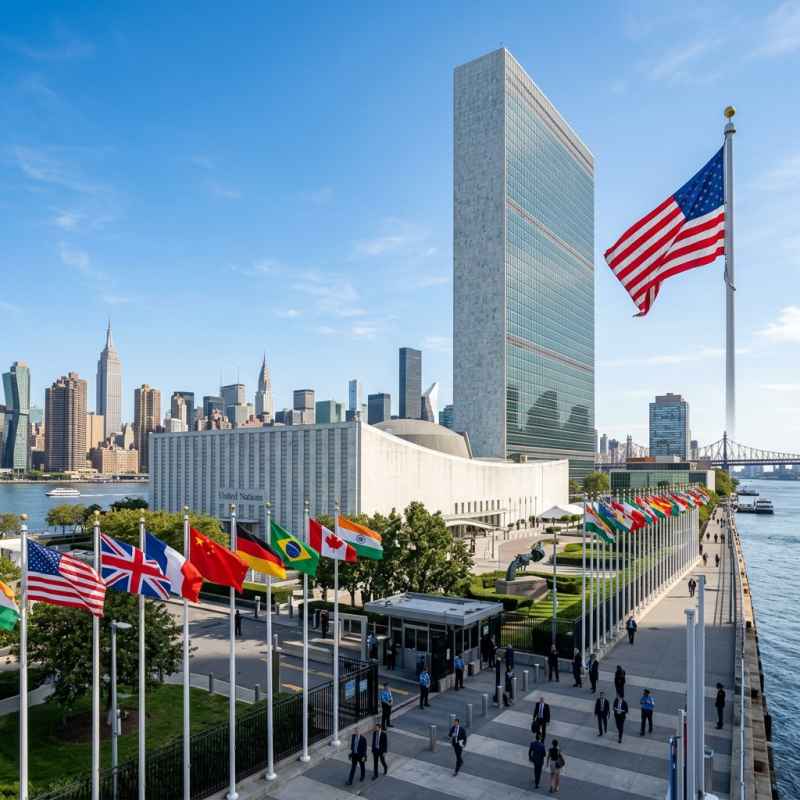
The United Nations (UN) General Assembly, held at the headquarters in New York City, is traditionally the grandest stage for international diplomacy. However, ahead of this year's crucial gatherings, geopolitical tensions have overshadowed the agenda. The central issue captivating the global community revolves around the United States' visa policies toward specific national delegates, most notably representatives from Palestine and Iran.
Palestinian Delegation Faces Access Hurdles
Recent reports indicate that the Palestinian delegation is facing significant obstacles in attending the UN sessions in person. The United States government has reportedly blocked or delayed visa approvals for key Palestinian representatives. This controversial decision has sparked fierce criticism from various international factions, who argue that the US, serving as the host nation for the United Nations, is obligated to facilitate the presence of all recognized entities without bias or discrimination.
Despite the physical entry to New York appearing obstructed, diplomatic observers note that alternative avenues remain accessible. In the modern digital era, virtual participation has become a legitimate and widely accepted alternative. Furthermore, allied nations and prominent non-governmental organizations continue to act as powerful amplifiers for the Palestinian cause within the assembly halls. High-level diplomatic efforts are constantly being mobilized by sympathetic nations to ensure that the voices of the Palestinian people continue to resonate forcefully across the international forum.
Severe Restrictions Imposed on Iranian Officials
Simultaneously, the treatment of the Iranian delegation has drawn significant global attention. While the Iranian delegates, including the President, were ultimately permitted to attend the UN General Assembly, the United States imposed incredibly strict movement limitations. According to the latest coverage, the Iranian President and his diplomatic entourage face stringent prohibitions on freely navigating beyond designated perimeters.
For instance, reports surfaced highlighting that the Iranian President was explicitly barred from shopping or engaging in casual leisure activities while visiting New York City. This restrictive policy is a direct continuation of the intense political pressure initiated during former President Donald Trump's administration, which consistently curtailed the movements of Iranian diplomats visiting the United States. Such tight restrictions underscore the deeply frozen bilateral relations between Washington and Tehran.
Impact on United Nations Integrity
The actions of the United States, utilizing its visa-issuing authority as an instrument of political leverage, have repeatedly triggered extensive debates. Under the 1947 UN Headquarters Agreement, the US is generally required to allow foreign diplomats to enter the country for official United Nations business, regardless of the bilateral relations between the two nations.
However, invoking national security exceptions is a loophole frequently leveraged by the host nation. This complex situation draws sympathy from the international community and raises fundamental questions regarding the fairness and neutrality of the UN forum if the host can selectively filter attendance. Ultimately, this diplomatic dynamic illustrates that the true battles of the UN General Assembly do not solely occur at the podium through state speeches; they begin at American embassies worldwide during the travel document application process.
Moving forward, the international public will closely monitor how the United Nations addresses these host nation interventions. Analysts are already discussing potential reforms, with some developing nations proposing a rotating host system for critical sessions to prevent any single country from weaponizing geography. The resilience of the United Nations is currently being tested as it strives to maintain a neutral, open dialogue space for every nation, ensuring that global diplomacy remains genuinely inclusive despite overarching bilateral conflicts.
Written by
Admin New
Admin • Total Kontribusi: 4505 artikel
Administrator of ModerNews
Reader discussion
Komentar (0)
Share your thoughts respectfully.