Rini Widyantini Targets Lazy Civil Servants

Admin New
Daftar Isi
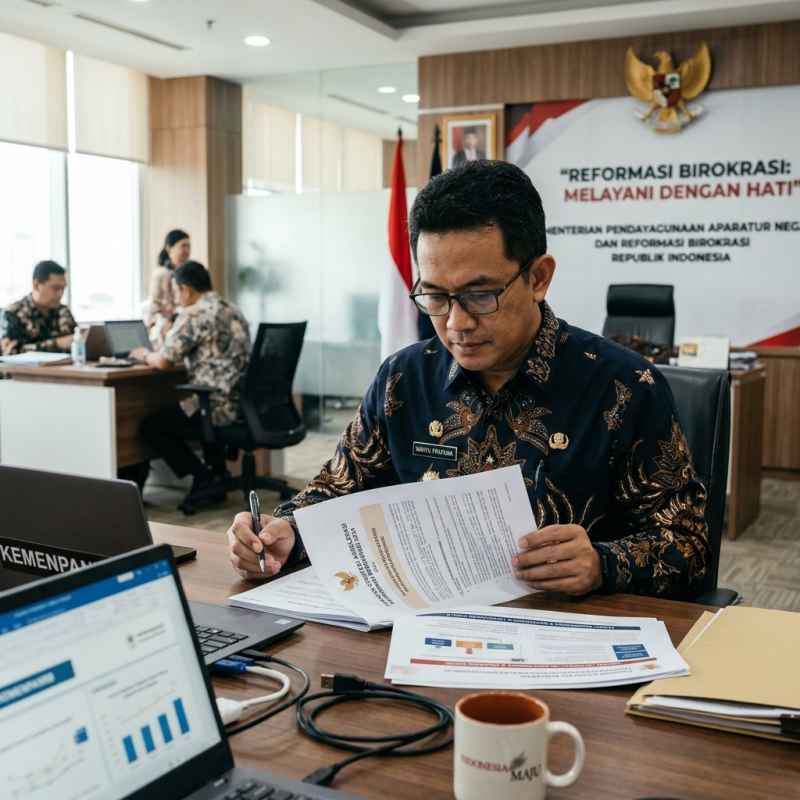
The performance and work ethic of Indonesian Civil Servants, locally known as ASN (Aparatur Sipil Negara), have once again taken center stage in national discourse. The name Rini Widyantini has emerged prominently amidst intense debates regarding the effectiveness and integrity of government employees. Bureaucratic reform, a long-standing priority for the government, continues to face significant hurdles, particularly when confronting deeply entrenched workplace cultures within various government agencies. This issue has escalated recently following a series of harsh criticisms from both legislative and executive branches demanding immediate, tangible change in public service delivery.
Parliamentary Criticism: Clock In, Coffee, Clock Out
Commission II of the House of Representatives (DPR) recently launched a scathing critique of the mentality displayed by a segment of civil servants. They highlighted a notoriously classic phenomenon described as "clocking in, drinking coffee, and going home." This practice reflects a severe lack of productivity and a glaring absence of responsibility toward public service. Lawmakers emphasized that the state allocates a massive budget for employee expenditures every single year. Therefore, the behavior of employees who show up at the office merely to fulfill attendance requirements, waste time in the cafeteria, and leave early can no longer be tolerated. This apathy is viewed as detrimental to the state economy and a betrayal of the taxpaying public's trust. The stern warning serves as a massive wake-up call for the Ministry of State Apparatus Utilization and Bureaucratic Reform to take swift actions.
An Open Letter to Civil Servants Nationwide
Responding to this urgent crisis of work ethic, the Ministry took an unexpected step by issuing a specialized letter addressed directly to all civil servants across the archipelago. This letter was not just a routine circular; it served as a strict warning and a moral calling to return to the true essence of public service. The letter strongly emphasized the paramount importance of integrity, stringent discipline, and continuous innovation in an increasingly fast-paced digital era. The government recognizes that without high-quality human resources, the ambitious vision of a "Golden Indonesia 2045" will remain a mere illusion. Furthermore, the letter signaled the definitive end of the "comfort zone" era where employees could coast by without contributing. Those proven to be underperforming will now face logical consequences, ranging from significant cuts in performance allowances to heavier administrative sanctions.
The Civil Apparatus Bill and the Push for KPI Systems
To provide a long-term, systemic solution, the government and the parliament are finalizing the new Civil State Apparatus Bill (RUU ASN). One of the most critical elements being pushed within this new regulatory framework is the strict implementation of a Key Performance Indicator (KPI) system. In the private sector, KPIs have long been the gold standard for objectively measuring employee output and efficiency. Now, this very system is set to be comprehensively adopted across all government institutions. With KPIs in place, every single civil servant will have clear, measurable daily, monthly, and annual performance targets.
This innovative system is specifically designed to eliminate subjectivity in performance evaluations. Career promotions, salary increments, and the disbursement of performance allowances will be based purely on the achievement of individual KPI metrics, rather than outdated metrics like seniority or personal connections with superiors. If an employee fails to meet their designated targets, their financial compensation will be adjusted accordingly. The integration of digital technology is also planned to ensure that performance monitoring can be conducted transparently and in real-time.
Striving for World-Class Bureaucracy
Transforming a deeply rooted workplace culture will certainly not happen overnight. It requires an unwavering commitment from all agency leaders to serve as role models for their subordinates. The radical steps currently being taken—from severe reprimands and official warning letters to the drafting of performance-based legislation—are essential foundations for building a more agile and adaptive bureaucracy. The ultimate goal is to completely eradicate the negative stigma surrounding lazy civil servants, establishing a world-class standard of governance.
Written by
Admin New
Admin • Total Kontribusi: 4495 artikel
Administrator of ModerNews
Reader discussion
Komentar (0)
Share your thoughts respectfully.