Premier League Crisis: Transfers Amid Heavy Losses

Admin New
Daftar Isi
The Premier League Paradox: Massive Spending Meets Financial Ruin
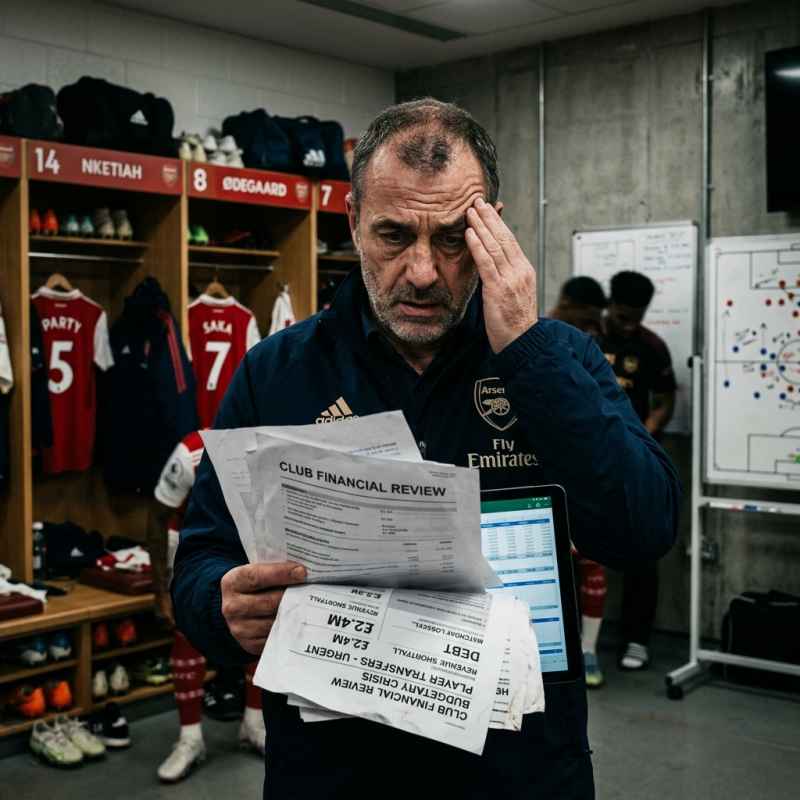
The English Premier League is widely celebrated as the most competitive, thrilling, and glamorous football competition on the planet. Yet, behind the spectacular goals and the deafening roars of packed stadiums, a grim reality is unfolding. According to recent reports, a staggering 90 percent of Premier League clubs are currently facing severe financial losses. This escalating crisis is raising serious questions about the long-term sustainability of the economic models governing England's top-tier football teams.
The 2026/2027 Transfer Window: Ambition Versus Reality
Ironically, the looming threat of massive financial deficits has done little to cool the highly aggressive player trading market. As the 2026/2027 transfer window approaches, the frenzy of squad overhauls continues unabated. The comprehensive list of incoming and outgoing players across the 20 participating clubs highlights an enormous circulation of wealth. Several clubs remain bold enough to shatter transfer records to secure new superstars, seemingly ignoring the heavy bleeding evident in their financial books.
The intense pressure to avoid relegation and secure European football, coupled with the relentless expectations of global fanbases, forces club owners and directors into taking massive financial gambles. Many are choosing to accumulate dangerous levels of debt or burn through cash reserves rather than face the sporting and economic catastrophe of dropping into the Championship. However, this precarious balancing act is becoming increasingly impossible to maintain amid the tightening grip of the league's Profitability and Sustainability Rules (PSR).
The Root of the Financial Crisis
Why are clubs in a league boasting the most lucrative television broadcast rights in the world losing so much money? The answer lies primarily in the exponential inflation of player wages and exorbitant agent fees. Even though revenue streams from broadcasting and global sponsorships are astronomically high, the percentage of income dedicated to operating costs—specifically player salaries—often exceeds sustainable limits. When a football club spends upward of 70 percent of its total revenue solely on player wages, even a minor dip in on-pitch performance can trigger a catastrophic financial domino effect.
Furthermore, significant capital investments in stadium expansions and state-of-the-art training facilities, often funded through high-interest borrowing, add a heavy long-term burden. If a club gambles on Champions League qualification and falls short, their projected revenue drops significantly, while their fixed operational costs remain punishingly high.
Securing the Future of English Football
This dire situation demands comprehensive structural reform from both league operators and football governing bodies. Without stricter expenditure limits or more robust financial regulations, the league's current ecosystem may face unprecedented collapses. Clubs must begin prioritizing economic sustainability over fleeting seasonal ambitions. Investing heavily in youth academies and employing smarter, data-driven scouting strategies should become the primary avenues for growth, rather than recklessly throwing money at every open transfer window.
Ultimately, the enduring beauty and competitive nature of the English Premier League should not be built upon a fragile financial foundation. Football fans worldwide undoubtedly want their beloved clubs to achieve glory on the pitch, but more importantly, they need these historic institutions to remain financially sound and operationally viable for generations to come. The era of unchecked spending must transition into an era of strict fiscal responsibility before the financial bubble bursts entirely.
Written by
Admin New
Admin • Total Kontribusi: 4513 artikel
Administrator of ModerNews
Reader discussion
Komentar (0)
Share your thoughts respectfully.