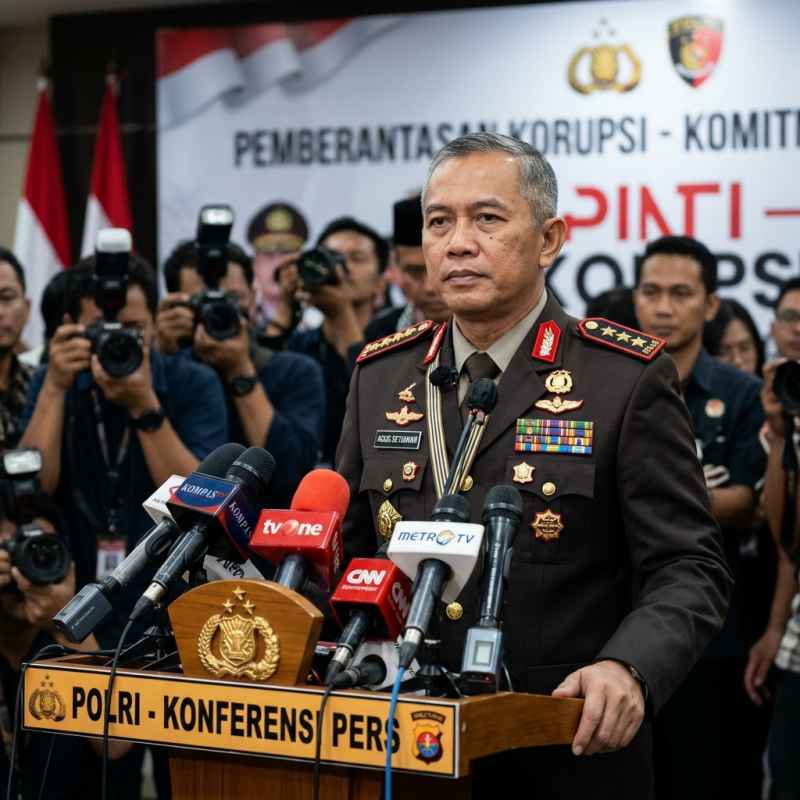
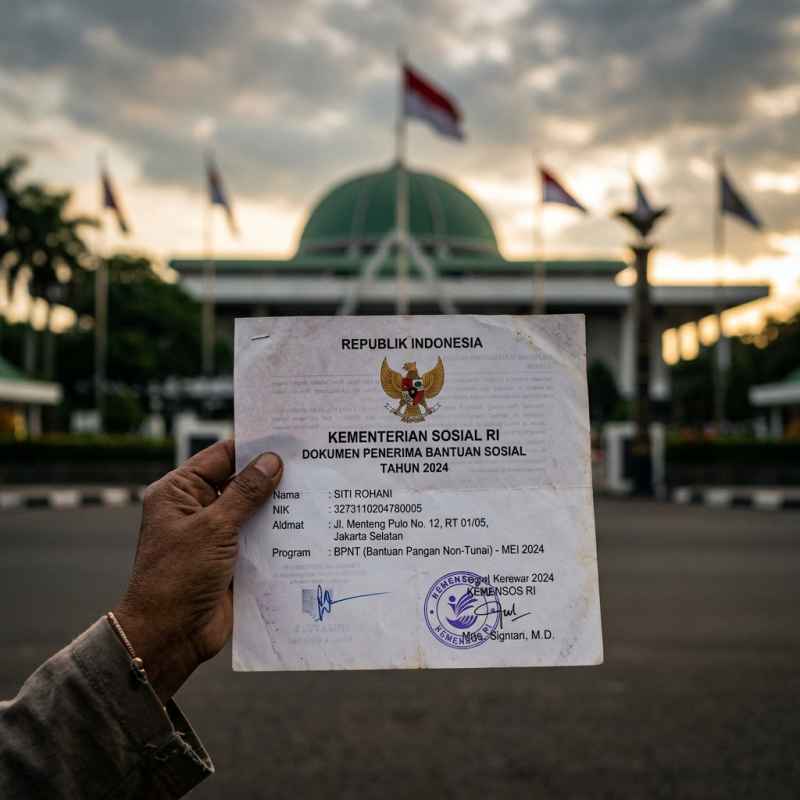
Outrage as Lawmakers Listed for Social Aid

Admin New
Daftar Isi
Social Assistance Outrage: Why Are Lawmakers Receiving Poverty Aid?
The Family Hope Program (PKH), Indonesia's flagship social assistance initiative, is currently under intense public scrutiny. A program strictly designed to support underprivileged households has inadvertently registered state officials, including members of parliament (DPR) and regional councils (DPRD), as legitimate beneficiaries. This bizarre phenomenon has triggered harsh criticism regarding the validity and accuracy of the Integrated Social Welfare Data (DTKS) managed by the government.
Shocking Discoveries: Legislators in Poverty Databases
Astonishing news has emerged regarding several high-profile lawmakers. The Head of the Central Statistics Agency (BPS) confirmed that NasDem Party legislator Eva Stevany was previously listed as a social aid recipient before her data was finally updated to Decile 10 (the wealthiest group). A similar incident occurred to another parliament member, Eva Rataba, who was recorded in Decile 4. The Decile 4 category denotes households with below-average welfare levels that are entitled to receive government social intervention.
Responding to this public relations disaster, Eva Rataba openly expressed her confusion. She firmly stated that neither she nor her family had ever registered to receive financial assistance from the government. "I am personally puzzled as to why my name could be included in decile 4 of social assistance recipients," she explained to the press. This data malfunction is not isolated to the central government. At the regional level, a council member of the Special Region of Yogyakarta (DPRD DIY) was also reported to be listed as a beneficiary under a low decile classification.
The Root of the Problem: Data Updating Mechanisms
The appearance of state officials—who earn hundreds of millions of rupiah—on direct cash assistance lists exposes a massive loophole in the welfare data collection process. The decile system is utilized to categorize community welfare levels from Decile 1 (extreme poverty) to Decile 10 (highly affluent). This gross misplacement strongly indicates severe sluggishness in field verification and validation processes.
Public policy experts suggest that this error could stem from multiple systemic failures. Firstly, the reliance on outdated historical data. An individual might have been in a lower-middle economic condition many years ago, but their records were not promptly purged after they experienced a drastic improvement in their standard of living, such as being elected to parliament. Secondly, there is a glaring lack of synchronization between the civil registry database (Dukcapil) and other relevant ministerial databases.
Devastating Impact on the Underprivileged
These distribution errors carry profound and serious implications. Every quota of assistance that falls into the hands of ineligible individuals effectively robs poor citizens who genuinely need state intervention to survive, fund their children's basic education, and meet essential nutritional needs. The Family Hope Program (PKH) was engineered as a crucial social safety net, not merely as a poorly controlled cash distribution scheme.
The central and regional governments are now heavily pressured to conduct an immediate, comprehensive audit of the DTKS data. The involvement of neighborhood heads and village apparatus must be optimized to carry out strict, door-to-door factual verification. Furthermore, a technology-driven whistleblowing system is urgently needed, allowing ordinary citizens to easily report if wealthy individuals are still receiving social assistance in their respective areas.
The incident involving Eva Rataba and other legislators must serve as a major catalyst for bureaucratic reform in national data management. The government can no longer use data updating delays as a valid excuse. An automatic data-matching evaluation system must be implemented by cross-referencing national identity numbers (NIK) with taxation databases and asset registries. Only through rigorous reform can the government ensure that the Family Hope Program truly delivers hope to the right people.
Written by
Admin New
Admin • Total Kontribusi: 4495 artikel
Administrator of ModerNews
Reader discussion
Komentar (0)
Share your thoughts respectfully.