Music Giants Sue Anthropic Over Claude AI

Admin New
Daftar Isi
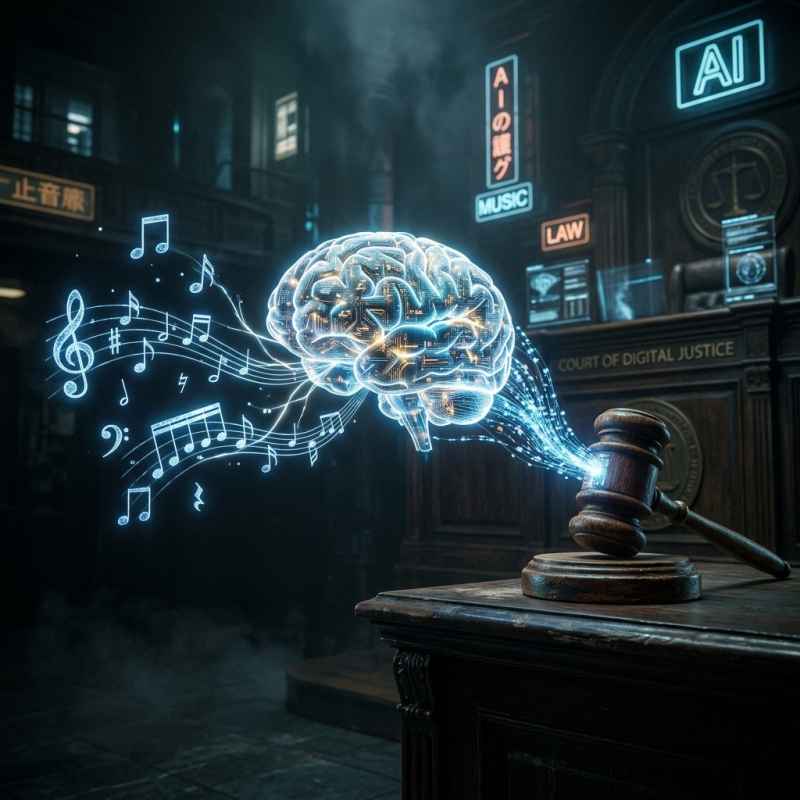
The generative artificial intelligence industry is facing yet another monumental legal challenge. Recently, a coalition of major global music publishers, including heavyweights like Sony Music and Warner Music Group, officially filed a sweeping copyright infringement lawsuit against Anthropic. The highly valued tech company behind the popular Claude AI language model is accused of systematically copying and distributing copyrighted musical lyrics to train its artificial intelligence systems without securing the necessary licenses or providing any compensation to the original creators.
The Core Issue: AI Training and Copyright Violations
At the heart of this intense legal battle is the methodology used to train large language models (LLMs) like Claude AI. To generate human-like responses and possess broad knowledge, AI requires ingestion of massive datasets scraped from the internet. Unfortunately for tech companies, much of this scraped data consists of legally protected intellectual property. In this specific lawsuit, Anthropic is alleged to have deliberately harvested the lyrics of countless popular musical compositions whose exclusive distribution rights belong to the major publishers.
The music labels argue in their court filings that when users prompt Claude AI to provide the lyrics to hit songs, the system is fully capable of generating text that is nearly identical to the original copyrighted works. The publishers view this not merely as a technical loophole, but as a massive commercial exploitation that harms them financially. It directly infringes upon the exclusive rights of songwriters and publishers to control how their art is distributed and reproduced in the digital ecosystem.
Broader Legal Implications for Artificial Intelligence
This escalating lawsuit has implications that extend far beyond Anthropic. If the courts rule in favor of the music publishers, it could fundamentally alter the landscape of generative AI development. Every major technology firm building LLMs might be forced to drastically overhaul their data collection methodologies. Strict licensing processes and royalty frameworks would become an absolute necessity, introducing massive new costs and complex negotiations that could slow down AI innovation.
Technology and legal experts note that current copyright laws, which were drafted decades before the advent of generative AI, are being pushed to their absolute limits. The doctrine of fair use, frequently used as a legal shield by Silicon Valley tech giants, may no longer be strong enough to protect commercial AI training practices that clearly extract financial value from third-party creative works without attribution or payment.
Growing Demands for Data Transparency
The lawsuit against Anthropic has also fueled broader public demands for transparency regarding AI training platforms. Up until now, many developers have operated within a black box, remaining highly secretive about the exact sources of their training data. Creators, musicians, and authors across the globe are demanding new regulatory frameworks that compel AI companies to explicitly declare which copyrighted works have been ingested into their training engines.
Furthermore, the coalition of music labels is seeking significant financial damages for the alleged infringement. They assert that creative works are not free raw materials to be exploited in the name of technological progress. Every lyric represents deep creative effort, emotional investment, and substantial financial backing. When AI engines like Claude distribute these works to millions of users uncompensated, it threatens the foundational economic ecosystem of the music industry.
Ultimately, this high-stakes clash between music industry giants and Anthropic will serve as a crucial historical milestone. The global community is watching closely to see how the judicial system will balance the rapid pace of high-tech innovation driven by models like Claude AI with the fundamental protection of intellectual property rights that have sustained human culture and artistry for centuries.
Written by
Admin New
Admin • Total Kontribusi: 4501 artikel
Administrator of ModerNews
Reader discussion
Komentar (0)
Share your thoughts respectfully.