Govt Reviews Said Iqbal BLT Plan

Admin New
Daftar Isi
The Looming Threat of Mass Layoffs
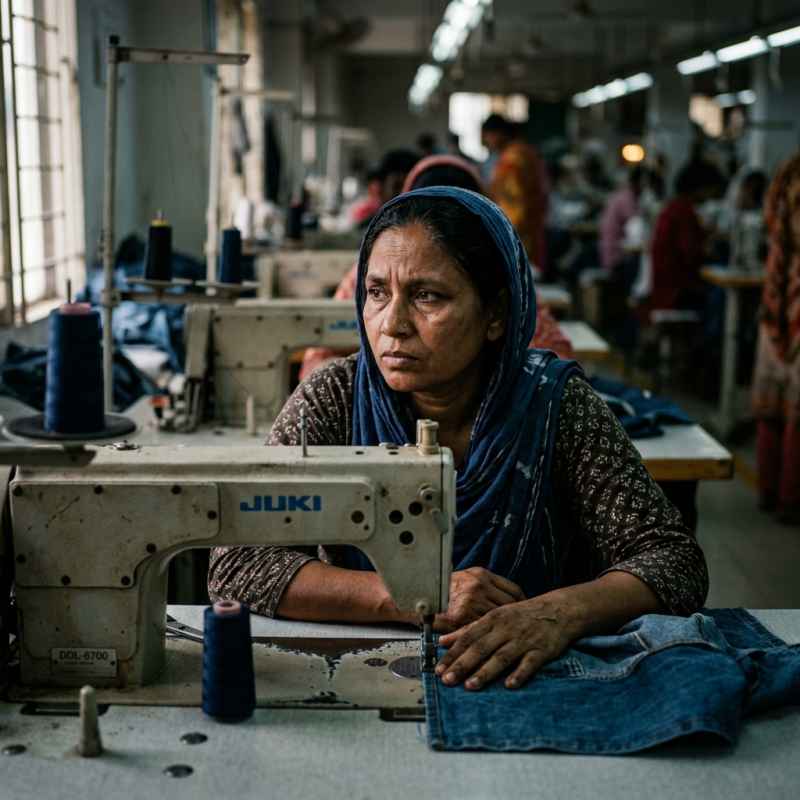
A wave of mass layoffs is once again haunting the labor-intensive manufacturing sector in Indonesia. As sewing machines in various textile and garment factories grind to a halt, the livelihoods of thousands of workers are left hanging in the balance. Declining demand in both global and domestic markets has forced many companies to implement drastic efficiency measures. This situation creates severe economic uncertainty for working-class families who rely heavily on the manufacturing industry.
The textile industry is one of the main pillars of employment creation in the country. The cessation of factory operations not only affects individual workers but also devastates the purchasing power of communities surrounding these industrial zones. Without strategic intervention from the government, this wave of layoffs has the potential to trigger a broader social crisis. Consequently, various stakeholders continue to voice the urgent need for targeted social safety nets tailored for directly impacted laborers.
Manpower Ministry Reviews Said Iqbal's Cash Aid Proposal
Amid the escalating crisis in the labor sector, the President of the Labor Party and the Confederation of Indonesian Trade Unions (KSPI), Said Iqbal, has proposed a strategic initiative. He is urgently calling on the government to disburse Direct Cash Assistance (BLT) specifically for workers who have been laid off. According to Iqbal, the current Job Loss Guarantee (JKP) program is not responsive enough and entails complex bureaucratic requirements that hinder workers from getting immediate financial relief.
The Ministry of Manpower (Kemnaker) has responded positively to this concept. Currently, the ministry is thoroughly reviewing the BLT idea proposed by Said Iqbal. This evaluation is being conducted to ensure that the funding and distribution schemes do not overlap with other existing social assistance programs. The government acknowledges that maintaining the purchasing power of the working class is absolutely critical to keeping the national economy moving forward during global economic slowdowns.
Regional and Central Government Synergy
Efforts to salvage the livelihoods of workers do not solely depend on the central government. At the regional level, various preventive and mitigation measures are also being accelerated. The Governor of Central Java, for instance, has actively formulated policies aimed at strengthening labor welfare within the province. Through local manpower agencies, the provincial government is facilitating vital tripartite dialogues involving business owners, trade unions, and local authorities.
Regional governments are heavily focusing on reskilling programs for retrenched workers, equipping them with new competencies to transition into alternative sectors or pursue independent entrepreneurship. Furthermore, strict supervision regarding the payment of severance packages is being enforced. The normative rights of workers must be strictly fulfilled by companies, even if those firms are undergoing financial restructuring or facing bankruptcy proceedings.
The success of these financial assistance schemes relies heavily on the speed and accuracy of employment data. The database from the employment social security agency (BPJS Ketenagakerjaan) must be utilized optimally to ensure that every single cent of the proposed BLT reaches the workers who genuinely need it. Monitoring the distribution of this aid also requires the active participation of trade unions to prevent any potential misuse or administrative delays.
Ultimately, the fate of the working class must not be reduced to mere political commodities or bureaucratic debates. They are the undeniable backbone of the nation's economy, ensuring that the national supply chain continues to function. The Ministry of Manpower's final decision regarding Said Iqbal's proposal will set a crucial precedent for how the state protects its citizens during an existential crisis caused by industrial collapse. Solid social protection remains the essential foundation for sustainable and equitable economic growth.
Written by
Admin New
Admin • Total Kontribusi: 4495 artikel
Administrator of ModerNews
Reader discussion
Komentar (0)
Share your thoughts respectfully.