Bahlil's Mining Policy: Vale Quota Cut & DPR Warn

Admin New
Daftar Isi
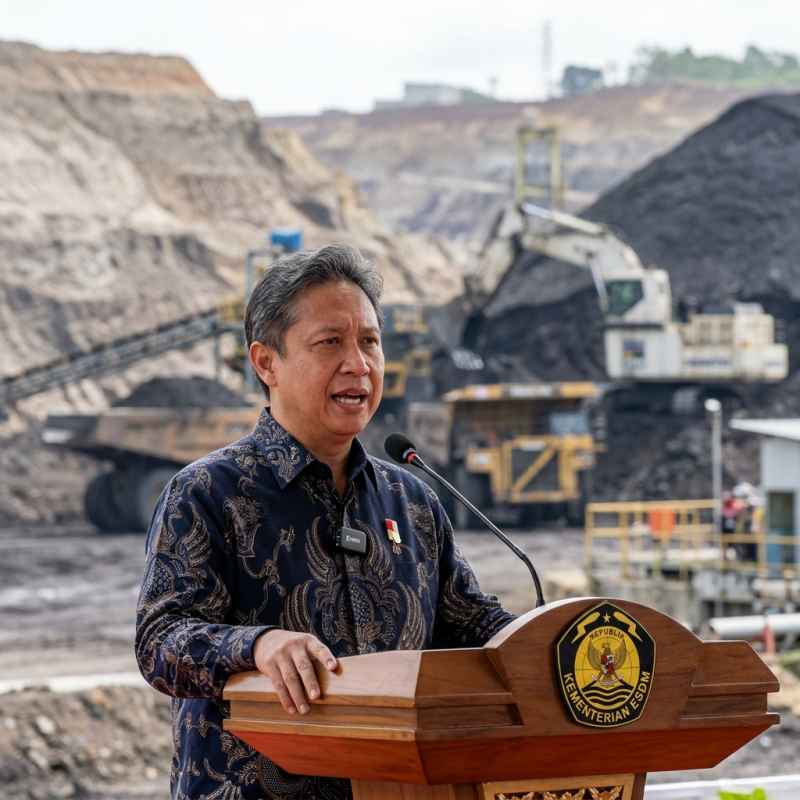
Minister Bahlil Lahadalia Guarantees National Coal Supply Stability
In the midst of dynamic shifts within Indonesia's mining and energy sectors, the Minister of Energy and Mineral Resources (ESDM), Bahlil Lahadalia, has once again taken center stage. In his most recent public address, Minister Bahlil firmly guaranteed that the current domestic coal production quotas are more than sufficient to meet the nation's electricity demands. This assurance provides a much-needed breath of fresh air for domestic energy stability, which heavily relies on consistent coal supplies to power its extensive network of power plants.
The government is continuously monitoring the Domestic Market Obligation (DMO) allocations to ensure there are no blackouts or supply crises at the state-owned electricity company's (PLN) coal-fired power plants. According to Bahlil, the absolute top priority of the ministry right now is to safeguard national energy security before even considering capitalizing on the highly lucrative global export market for coal.
Controversy Surrounding PT Vale's RKAB Quota Cut
While domestic coal supplies are deemed secure, other mineral mining sectors are facing significant bureaucratic hurdles and rigorous evaluations. One of the most fiercely debated issues currently involves the Work Plan and Budget (RKAB) of the nickel mining giant, PT Vale Indonesia. Bahlil has openly stated that the production quota requested in Vale's RKAB has experienced a significant reduction by the ministry.
Interestingly, in a statement that has sparked various reactions across the industry, Bahlil mentioned that the approval and size of the RKAB quotas depend heavily on the company's good deeds or track record. This figurative expression directly refers to a mining company's strict compliance with government regulations, their genuine commitment to downstreaming (hilirisasi), and their overarching environmental and social responsibilities. This rigorous evaluation clearly demonstrates that the Indonesian government is no longer hesitant to take decisive action against major corporations if they are perceived as under-contributing to the strategic national industrial ecosystem.
Strict Warnings from DPR's Commission XII
The progressive and sometimes controversial policies adopted by Bahlil have not escaped the strict oversight of the legislative branch. Commission XII of the House of Representatives (DPR), which directly oversees energy and mineral resources, has issued a specific and stern warning to the minister. The lawmakers urged Bahlil to exercise extreme caution and diligence when managing and approving RKABs, especially for strategic commodities like coal and nickel.
Members of the parliament highlighted that RKAB approvals have a direct and profound impact on the investment climate, business certainty, and non-tax state revenue (PNBP). A process that is too slow, overly bureaucratic, or perceived as selective could trigger dangerous instability in the mining sector, which remains one of the fundamental backbones of the Indonesian economy. Therefore, absolute transparency and strict accountability in determining RKABs must be continuously improved to prevent any potential maladministration or conflicts of interest.
Balancing Foreign Investment and National Interests
The greatest challenge currently facing Bahlil Lahadalia as the Minister of ESDM is how to perfectly balance the act of attracting foreign investment while fiercely protecting national interests. The deliberate reduction of Vale's quota sends a powerful signal to the global market: Indonesia demands commitment far beyond the mere extraction of raw minerals. Conversely, the strict warning from the DPR serves as a necessary balancing mechanism to ensure that all executive policies remain firmly within the corridors of law and economic rationality.
Moving forward, stakeholders within the mining industry must become highly adaptive to this new, stricter policy direction. Strict compliance with environmental regulations, the rapid acceleration of smelter projects, and the fulfillment of domestic obligations are no longer optional add-ons; they are absolute prerequisites for smooth RKAB approvals. The public and investors alike are now closely watching Bahlil's next strategic moves in navigating the complex waters of national mining bureaucracy.
Written by
Admin New
Admin • Total Kontribusi: 4501 artikel
Administrator of ModerNews
Reader discussion
Komentar (0)
Share your thoughts respectfully.